
Retaining Walls in the Minnesota: Fixing Sloped Yards and Erosion Problems
Many Twin Cities homeowners deal with sloped yards, erosion issues, or failing timber retaining walls. A properly built retaining wall not only solves those problems — it also creates usable space and adds beautiful structure to your landscaping.
Here’s what you should know before installing a retaining wall in the Minneapolis–St. Paul area.
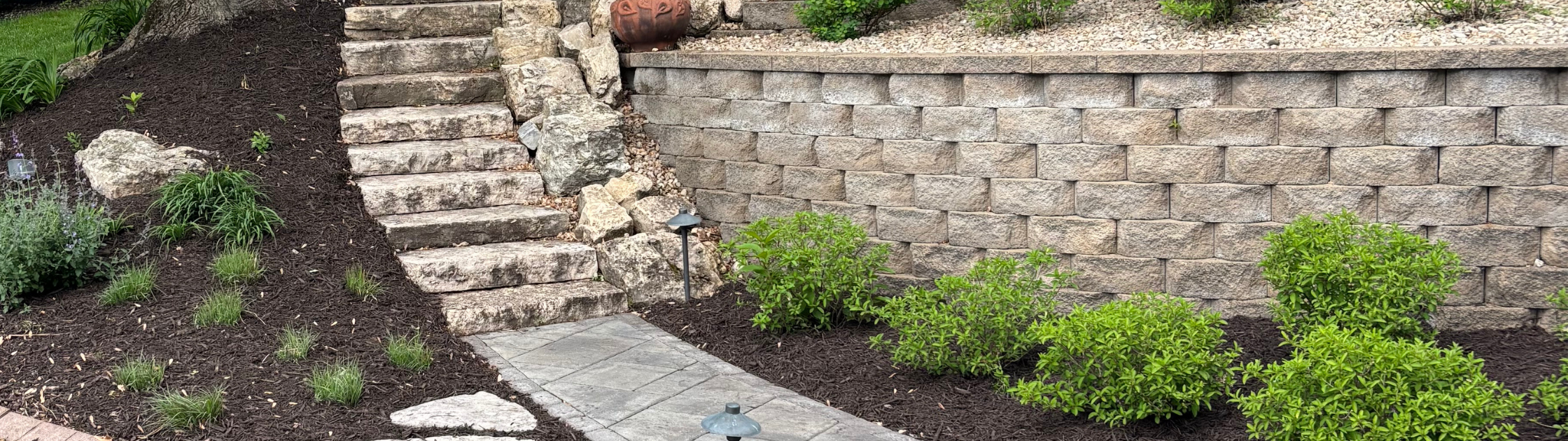
Signs you may need a retaining wall
You might benefit from a retaining wall if you notice:
soil washing away after rain
sinking or bowing landscape edges
a steep yard you can’t safely use
exposed roots or foundation
leaning, cracked, or rotting timber walls
Minnesota’s heavy spring melts and clay soils can make erosion worse over time, so early intervention can prevent much bigger problems.
Types of retaining walls we build
Different yards require different retaining wall systems. Common options include:
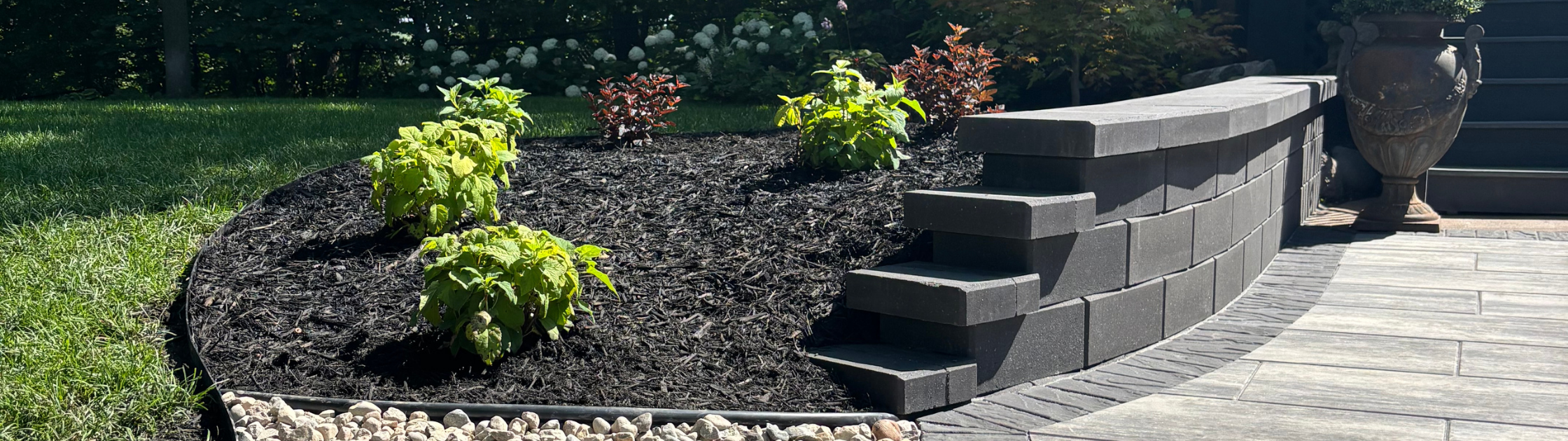
✔️ Block retaining walls
Durable, clean, and highly customizable in color and style.
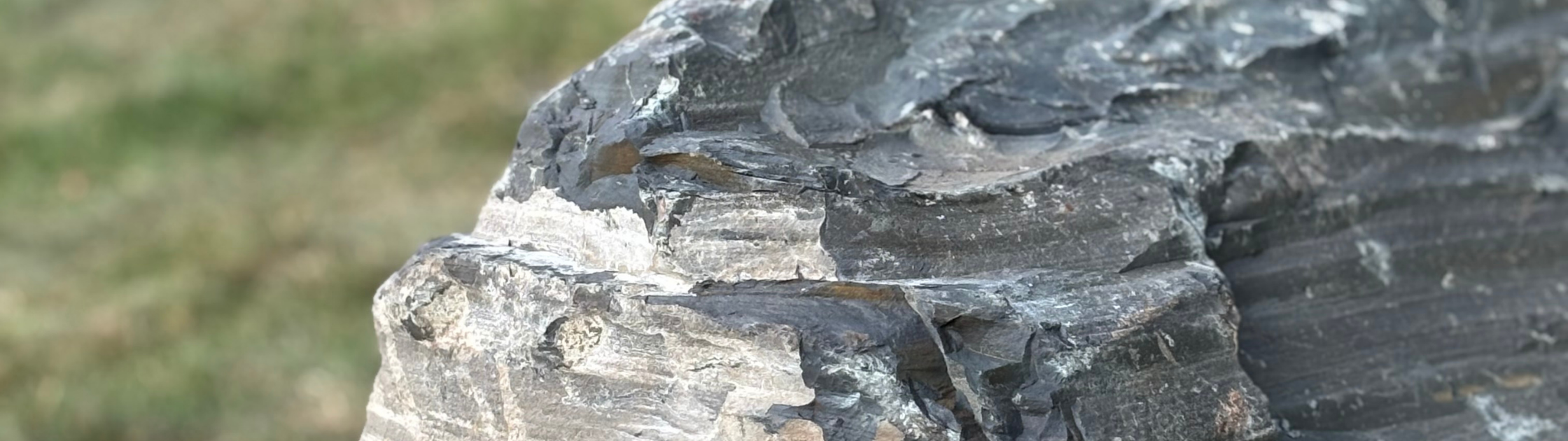
✔️ Boulder retaining walls
Natural Minnesota stone for a rustic look that blends into the landscape.
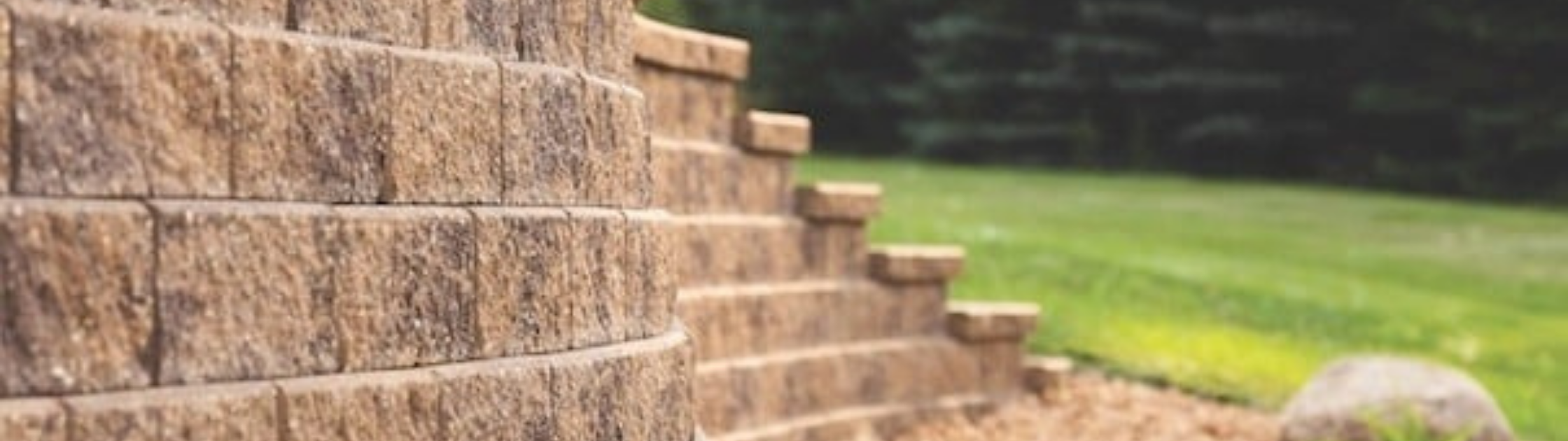
✔️ Engineered systems
Used for taller walls or situations needing extra reinforcement and drainage planning.
We design retaining walls to meet both aesthetic goals and structural requirements — because in Minnesota, pretty isn’t enough. It needs to last.
Why drainage matters more than anything
The number one reason retaining walls fail is poor drainage. Water builds up behind the wall, pressure increases, and the wall eventually bows, cracks, or collapses.
A well-built retaining wall includes:
proper base depth
geo-grid reinforcement if needed
drainage rock
drain tile or weep system
correct backfill
This is where DIY often goes wrong — the failure doesn’t show right away, but a few snowmelt cycles later, problems appear.
Do retaining walls require permits?
In many Twin Cities communities, retaining walls over a certain height require engineering or permits. Part of our job is helping homeowners navigate those rules so you stay within code and your project is safe and long-lasting.
Create usable space from a sloped yard
Retaining walls can:
carve out flat lawn or play areas
create terraced planting beds
support patios or hot tubs
open space for sheds or storage
prevent erosion damaging foundations
If you’re dealing with erosion or a sloped yard, a retaining wall may be the best long-term solution.
